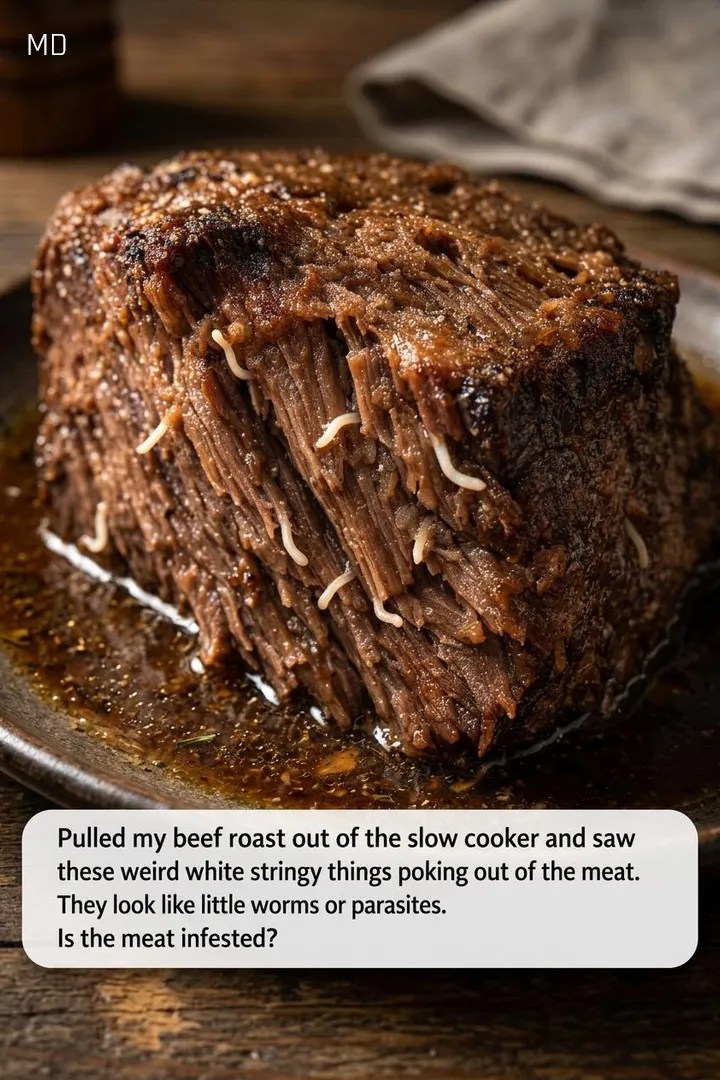
Opening a slow cooker and noticing pale or stringy pieces inside a beef roast can catch many people off guard, especially if they have never seen it before. At first glance, the texture may seem unusual and even cause concern about whether the food is safe to eat. However, in most cases, these strands are completely normal and are simply part of how beef changes during the slow-cooking process. What you are seeing is usually connective tissue, not anything harmful or unsafe. In fact, this transformation is often a sign that the meat is cooking exactly the way it should.
Beef naturally contains collagen, a protein found in connective tissues that helps support and hold muscle fibers together. When meat cooks slowly over several hours at low temperatures, this collagen gradually breaks down. As it softens, it turns into gelatin, creating the rich texture and tenderness that make slow-cooked meals so comforting and flavorful. During this process, some of the connective tissue may appear as thin white or translucent strands throughout the roast. While the appearance may seem unfamiliar at first, it is actually a normal reaction that occurs in many cuts of beef prepared in slow cookers, pressure cookers, or braised dishes.
These softened strands help create the juicy, fall-apart texture people often expect from a well-cooked roast. Instead of remaining tough or chewy, the meat becomes tender because the connective tissue has had enough time to break down naturally. Many traditional comfort foods rely on this exact process to achieve their signature taste and texture. Pot roast, shredded beef, and slow-cooked stews all benefit from collagen turning into gelatin over time. What may look unusual before serving is often what gives these dishes their rich flavor and satisfying consistency once fully cooked and plated.
It is also important to remember that beef sold through grocery stores is carefully processed and inspected according to food safety guidelines. Serious contamination issues are extremely uncommon when food is properly stored, handled, and cooked. Slow cooking generally heats meat thoroughly enough to make it safe to eat while also improving texture and flavor. If your roast smells fresh, has been refrigerated correctly, and shows no signs of spoilage beyond the stringy appearance, there is usually no reason for concern. Understanding how collagen works can make home cooking feel less stressful and help you enjoy your meal with greater confidence.