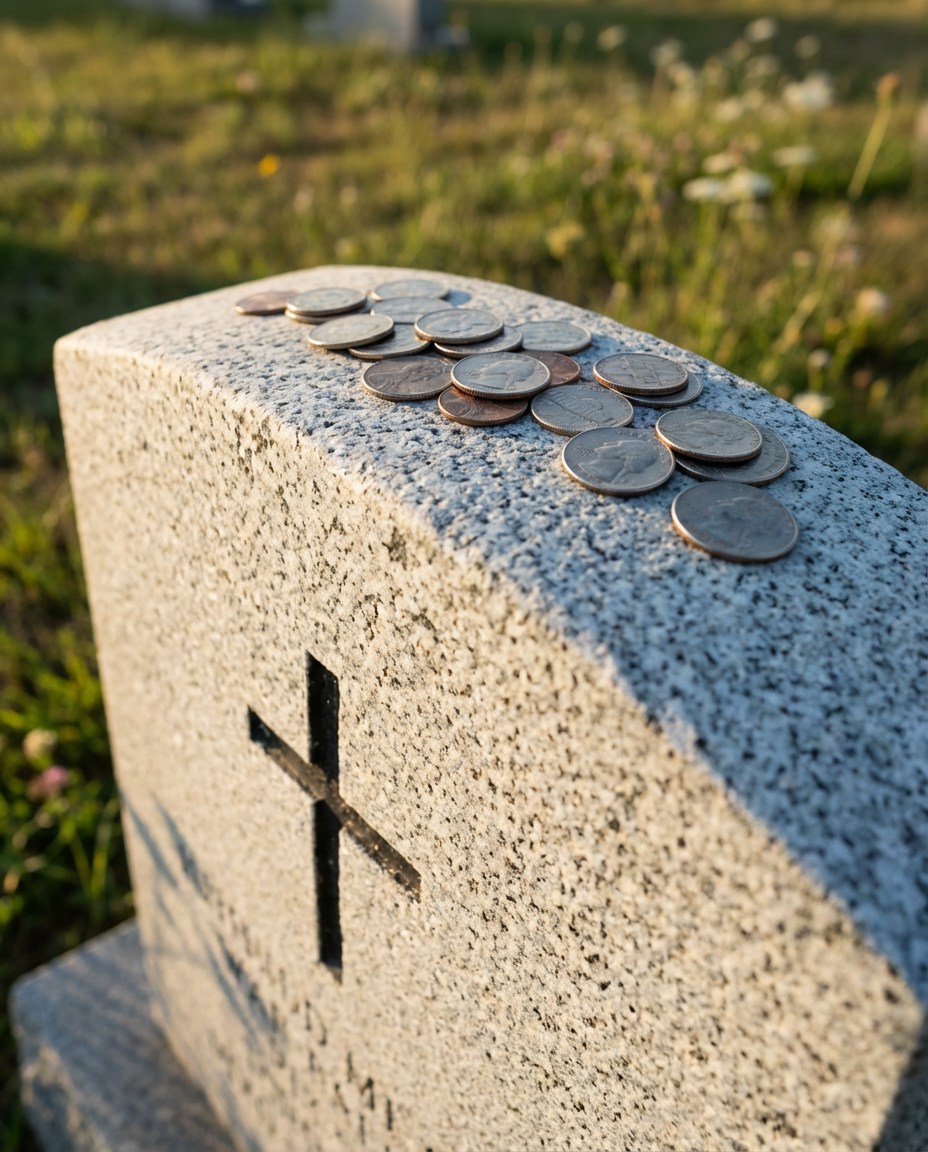
If you have ever walked through a cemetery and noticed small coins placed carefully on a gravestone, it may have caught your attention. At first, these coins can appear to be loose change, accidentally dropped or left behind without thought. In truth, they represent something far more meaningful. This quiet tradition is a respectful way for visitors to honor the deceased, offering a message of remembrance without words. Each coin is placed with purpose, symbolizing connection, gratitude, and respect for a life that mattered.
This custom is most commonly associated with military graves in the United States and has been practiced for decades. Rather than signing a guest book or leaving a note, visitors leave coins to show that they personally visited the resting place. It is a subtle but powerful way to acknowledge service and sacrifice. Over time, this practice developed its own symbolic language, where different coins carry different meanings. What looks simple on the surface is actually a deeply thoughtful system of honoring shared history and commitment.
Each type of coin tells a unique story. A penny is the most common and represents remembrance, letting the family know that someone took a moment to stop and reflect. A nickel signifies that the visitor trained alongside the service member, often during early military preparation. A dime carries even deeper meaning, showing that the visitor served in the same unit and shared time and experiences during active duty. These distinctions may be small, but they form a meaningful bond among those who understand the tradition.
The quarter holds the most emotional significance. Leaving a quarter means the visitor was present at the time of the service member’s passing, symbolizing a shared moment of loss and an enduring connection. Coins are often chosen because they last. Unlike flowers that fade or notes that can be removed, coins remain quietly in place, enduring through time and weather. For families who later discover these coins, learning their meaning often brings comfort and reassurance. It serves as a reminder that their loved one is still remembered, still honored, and still respected. This tradition shows that even the smallest gestures can carry great meaning, proving that remembrance does not need to be elaborate to be powerful.