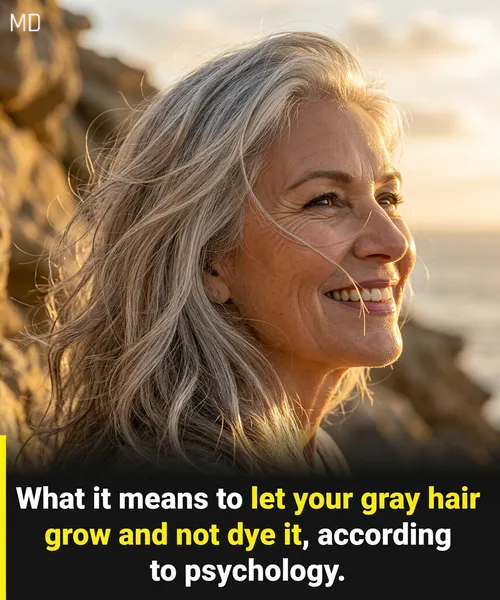
In recent years, more people have begun choosing to leave their gray hair natural rather than covering it with dye. Psychologists say this growing trend reflects more than just a change in fashion—it signals a deeper shift in how people understand identity, confidence, and aging. For much of modern history, gray hair was often associated with decline or loss of relevance, and many felt pressure to hide it in order to appear younger. These ideas shaped cultural expectations, encouraging people to maintain a youthful appearance at almost any cost. Today, however, attitudes are changing. Gray hair is increasingly viewed as a symbol of authenticity, wisdom, and self-assurance rather than something to hide. What was once seen as a sign of aging is now, for many, a meaningful expression of personal acceptance.
From a psychological perspective, the decision to stop dyeing hair often represents a shift in self-perception. Hair plays an important role in how people present themselves to the world, so allowing gray strands to show can challenge long-held beliefs about beauty and aging. Many individuals discover that their discomfort with gray hair is not really about appearance but about fears of judgment or feeling less visible as they grow older. Choosing to embrace natural hair can therefore become a powerful moment of self-reflection. It allows people to redefine how they see themselves and move away from the idea that their value is tied to looking young.
Psychologists often describe this decision as a form of self-affirmation. By letting their natural hair color show, people communicate acceptance of who they truly are. This choice can reflect emotional maturity and personal independence, especially in cultures that have long emphasized youth as the standard of beauty. For women in particular, the decision can carry special meaning. For decades, women have faced strong pressure to conceal signs of aging, making gray hair feel like something that must be corrected. Many women who stop dyeing their hair describe feeling a sense of relief and freedom after stepping away from those expectations.
Men have traditionally been given more freedom to age visibly, yet they too are beginning to rethink the pressure to appear constantly youthful or competitive. For both men and women, embracing gray hair often reflects a healthier relationship with time and self-image. Rather than seeing aging as something to resist, many people now view it as a natural part of life that can bring confidence and perspective. Ultimately, choosing to keep gray hair natural is less about appearance and more about emotional freedom. It represents a growing cultural movement toward authenticity, resilience, and a deeper sense of self-acceptance.