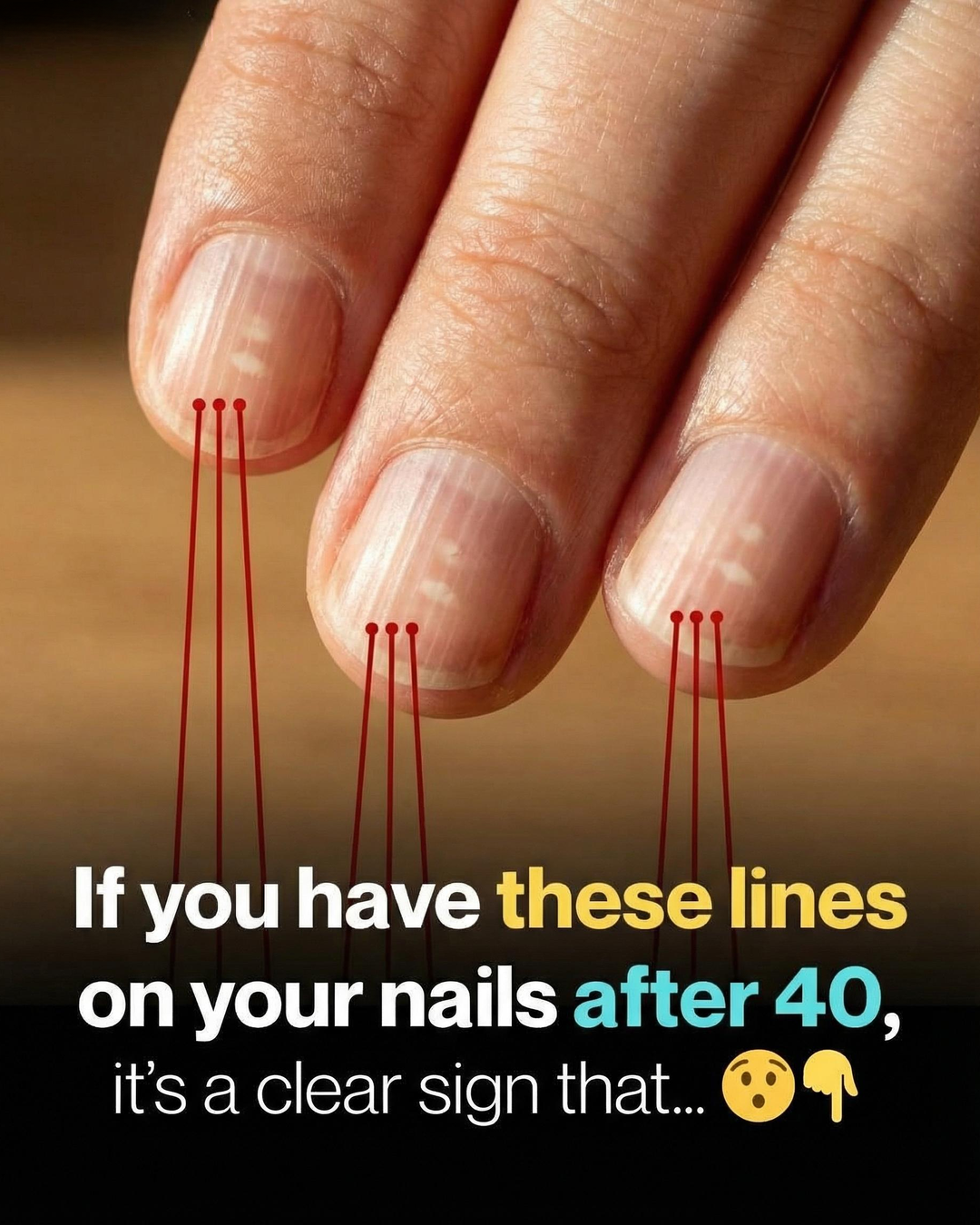
Noticing thin vertical lines running from the base of your fingernails toward the tips can be surprising, especially when they seem to appear more clearly with age. Many people begin to observe these changes after turning 40, and in most cases, they are completely normal. Vertical nail ridges are usually a reflection of natural aging rather than a sign of illness. Just as skin develops fine lines and hair texture evolves over time, nails also change as the body matures. While these ridges are often harmless, understanding why they form can help you care for your nails and stay attentive to your overall well-being.
Vertical nail ridges, sometimes called longitudinal ridges, are lines that follow the length of the nail from cuticle to tip. Nails are made primarily of keratin, a protein that relies on consistent cell production for smooth growth. As the years pass, the nail matrix—the area beneath the cuticle where nails are formed—may slow its activity. This can lead to uneven keratin layering, which appears as ridging on the nail surface. Dryness can further highlight these lines, as aging skin and nails tend to retain less moisture. Frequent handwashing, cleaning products, and exposure to harsh soaps may also contribute by stripping away natural oils that normally keep nails flexible and smooth.
In some cases, lifestyle and internal factors can make vertical ridges more noticeable. Mild nutritional imbalances, particularly involving nutrients that support nail structure, may affect nail appearance over time. Changes in circulation can also influence nail growth, as healthy blood flow helps deliver oxygen and nutrients to the nail matrix. Hormonal shifts that occur with aging may play a role as well, subtly altering how nails grow and repair themselves. While these influences are often gradual and mild, it’s important to pay attention to any changes that seem sudden, unusual, or accompanied by other physical symptoms, as nails can sometimes reflect broader changes happening in the body.
Caring for aging nails doesn’t require complicated routines, but consistent habits can make a visible difference. Keeping nails and cuticles moisturized helps reduce dryness and improves their overall appearance. Wearing gloves during household chores protects nails from excess water and chemicals, while gentle filing prevents unnecessary thinning or damage. Staying hydrated and maintaining a balanced diet supports nail health from the inside out. Most importantly, remain mindful of changes in color, texture, or comfort. While vertical ridges are typically a normal part of getting older, paying attention to your nails can be a simple yet valuable way to stay connected to your body’s overall health.