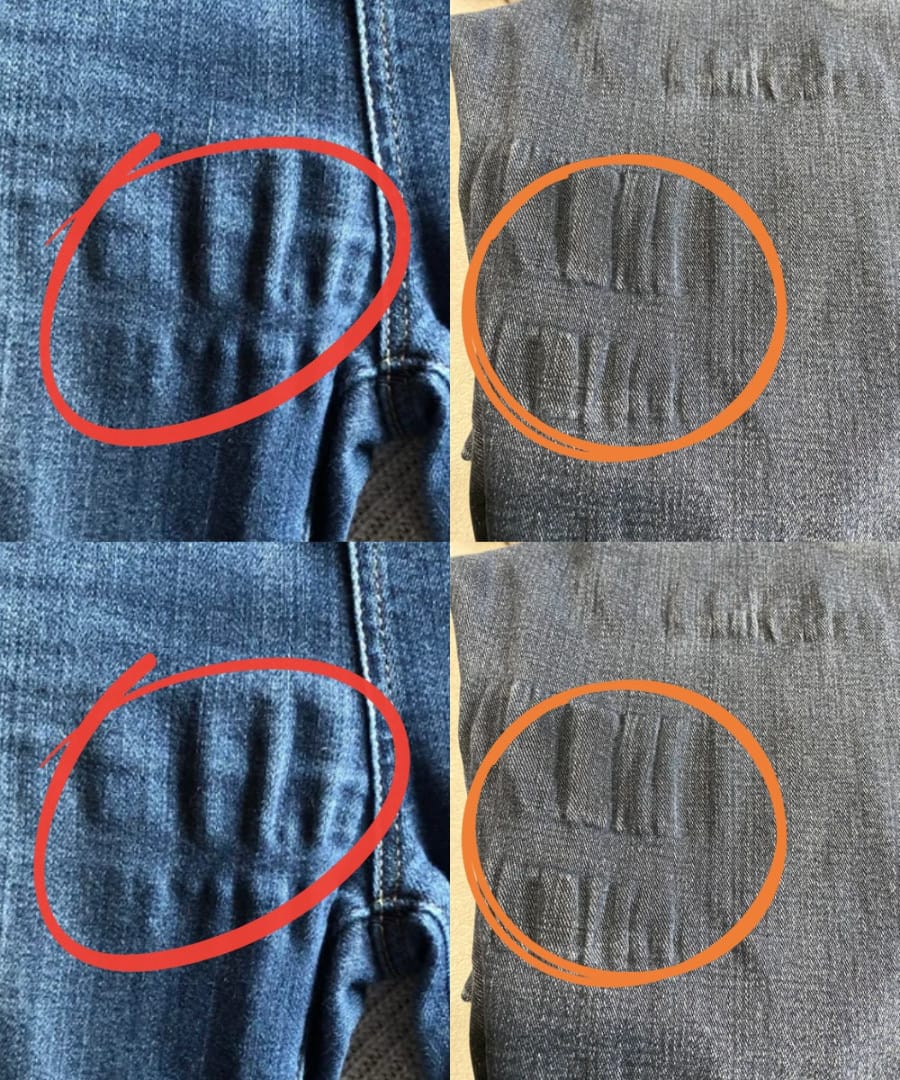
Many people notice that their jeans develop ripples, puckering, or a slightly wavy texture after washing, and this change can be confusing. In most cases, it has less to do with poor quality and more to do with how modern denim is made. Today’s jeans are rarely 100 percent cotton. Instead, they usually include a small amount of stretch fiber, such as elastane, to improve comfort and fit. While this blend makes jeans more flexible and flattering, it also makes them more sensitive to heat. Warm or hot water, along with high dryer temperatures, can weaken the stretch fibers, causing the surrounding denim to shift and lose its original structure.
Washing habits also play a major role in how jeans age. Denim is designed to be durable, but frequent washing gradually breaks down the fibers. Many people wash their jeans after only one or two wears, even when they are still clean. Over time, this repeated exposure to water and agitation can lead to uneven shrinkage. Inside the washing machine, jeans twist, fold, and stretch in different directions, especially if the load is too full. This uneven stress doesn’t always affect the entire garment equally, which is why ripples often appear in specific areas like the thighs, knees, or seams.
Another factor is how denim absorbs and releases moisture. Fabric does not always soak up water evenly, particularly when stretch fibers are involved. Some sections may swell more than others during washing, and as the jeans dry, those areas shrink at slightly different rates. If jeans are packed tightly in the washer or dryer, they may dry in awkward positions, locking in wrinkles or waves. Over time, these distortions can become more noticeable and harder to smooth out, even with ironing or steaming.
Fortunately, preventing ripples and puckering is mostly about gentle care. Washing jeans in cold water helps protect stretch fibers and reduces the risk of warping. Turning them inside out before washing minimizes friction and helps preserve the fabric’s surface. When possible, air drying is the safest option, but if you use a dryer, choose a low-heat setting and remove the jeans while they are still slightly damp. Allowing them to finish drying flat or on a hanger helps maintain their shape. Finally, avoid overloading your washing machine so jeans have room to move naturally. With these simple steps, jeans can stay smooth, comfortable, and well-shaped for years to come.